



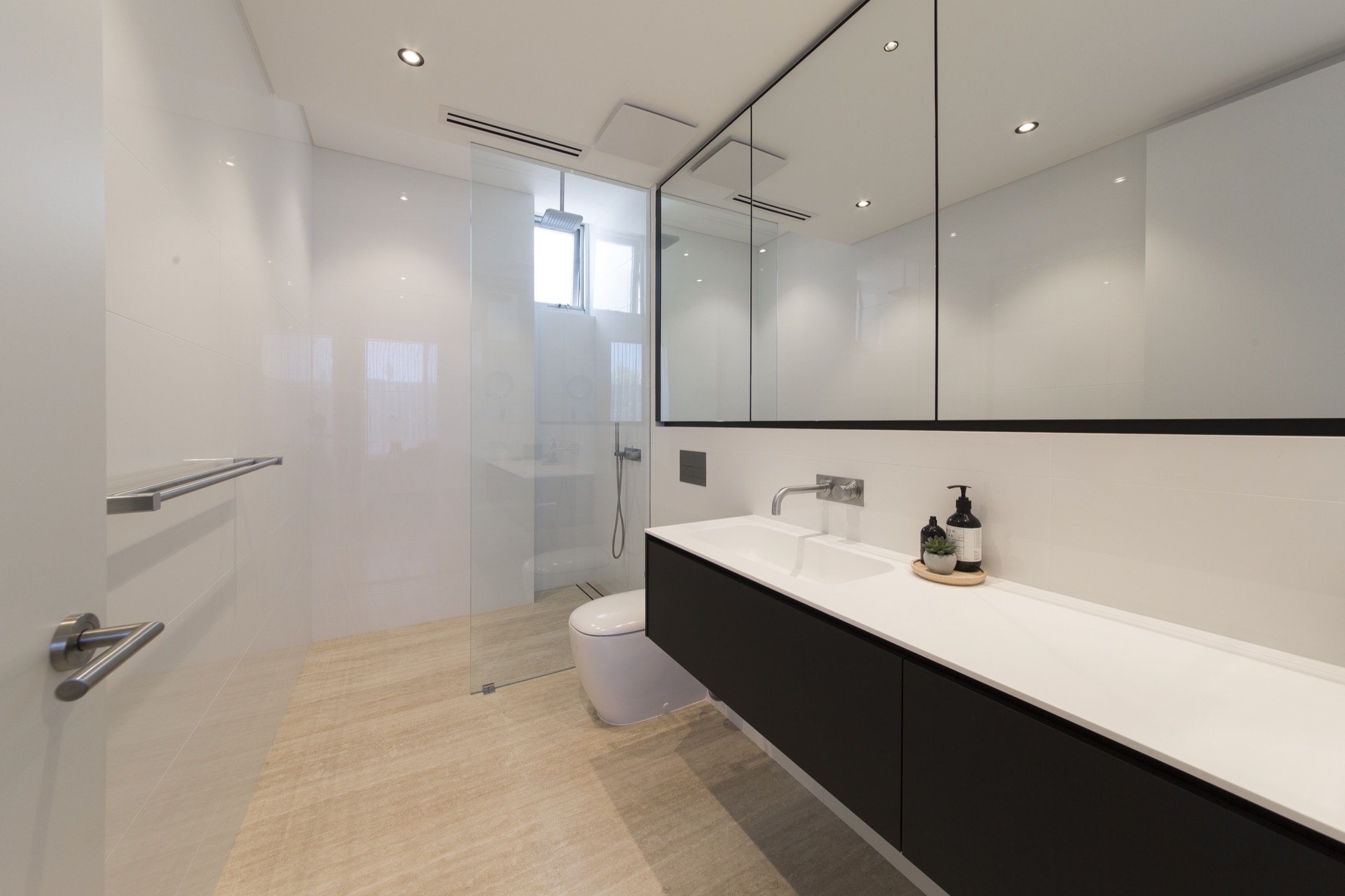

Why Engineering Matters in Glass Projects: The Serious Consequences of Getting It Wrong
When specifying glass for a project, it's easy to focus on aesthetics, transparency, and design intent. But for many applications, glass performs far more than a visual function. It can act as a barrier, a protective system, or even a structural element within the building.
By Tough Glass

Whether it's a balustrade protecting people from a fall, a pool fence complying with safety regulations, or a large façade exposed to significant wind loads, the performance of the glass directly impacts the safety and integrity of the finished project.
Failing to properly engineer a glass installation can result in project delays, compliance issues, costly rectification work, and, in the most serious cases, injury.
When Glass Becomes a Safety-Critical Element
Not every glass application requires engineering input. Standard windows and internal partitions often have straightforward specification requirements.
However, engineering becomes essential when glass performs a protective, structural, or load-bearing role.
Common applications include glass balustrades, pool fencing, overhead glazing, skylights, canopies, structural glass assemblies, and large-format façade systems. In each of these applications, the glass must withstand forces and conditions that extend well beyond its appearance.
A frameless balustrade, for example, may appear simple, but it must be capable of resisting human impact, barrier loads, environmental pressures, and ongoing day-to-day use throughout the life of the building.
What Engineering Actually Assesses
Engineering is the process of determining how a glass system will perform under the conditions it will face once installed.
This assessment considers factors such as structural loading, wind pressure, impact resistance, deflection limits, fixing methods, hardware performance, building movement, and compliance obligations.
The outcome influences critical decisions including glass type, thickness, lamination requirements, support systems, and installation methods.
Because every project is different, specifications that are suitable for one application may be completely inappropriate for another.
Compliance Is More Than a Box-Ticking Exercise
Australian Standards such as AS 1288 and AS/NZS 2208 establish the requirements for safe and compliant glazing systems.
Engineering documentation demonstrates that a proposed system has been assessed against these requirements and is suitable for its intended use.
Without appropriate engineering, projects may encounter approval delays, redesign requirements, failed inspections, or increased liability exposure. More importantly, the absence of engineering leaves uncertainty around whether the system can safely perform as intended.
The Value of Early Engineering Input
The most successful projects consider engineering during the design and specification stage, rather than at the point of approval.
Early collaboration between architects, builders, engineers, glaziers, and glass processors helps identify potential challenges before they affect programme timelines or project budgets.
It also allows project teams to make informed decisions around glass selection, compliance requirements, structural performance, and installation methodology from the outset.
Building with Confidence
Modern buildings continue to push the boundaries of glass design, with larger panels, more complex systems, and greater performance expectations than ever before.
Engineering provides the technical foundation that allows these designs to be delivered safely, compliantly, and with confidence.
For builders, architects, developers, and glaziers, engineering is not simply about satisfying regulations. It is a critical part of managing risk, protecting occupants, and ensuring the long-term performance of the finished project.
Related articles
-
 View Edge Finishing Options Explained
Edge Finishing Options Explained
Smooth, polished, bevelled, mitred — which edge finish to specify and why.
-
 View IGU Spacer Systems Explained: Choosing the Right Spacer for Performance, Shape, and Size
IGU Spacer Systems Explained: Choosing the Right Spacer for Performance, Shape, and Size
When specifying or manufacturing an Insulating Glass Unit (IGU), the spacer system plays a critical role in thermal performance, gas retention, durability, and fabrication flexibility.
-
 View Heat-Soaked vs Heat-Strengthened Glass: Understanding the Difference
Heat-Soaked vs Heat-Strengthened Glass: Understanding the Difference